In structural steel fabrication, industrial construction, and heavy equipment anchoring, selecting the correct fastener specification is a critical engineering decision. Among carbon steel fastners, A36 bolts (frequently specified as ASTM A36 anchor bolts or rods) are some of the most widely used components globally. However, procurement managers and contractors often face questions regarding their precise yield strength, tensile limits, and when they can be used instead of high-strength alternatives like ASTM A325.
Understanding the core technical specifications and grading thresholds of A36 bolts ensures project safety, structural compliance, and precise budget estimation for international steel building contracts.
Technical Overview: What Is an ASTM A36 Bolt?
ASTM A36 is a standard material specification established by the American Society for Testing and Materials (ASTM) covering carbon structural steel shapes, plates, and bars of structural quality. When manufactured into fasteners-most commonly as headed bolts, straight anchor rods, or bent U-bolts-A36 steel provides an economical, highly ductile, and easily weldable fastening solution.
Unlike highly specialized structural bolts, A36 bolts are classified as low-to-medium carbon steel. They are primarily utilized in light-to-medium structural connections, building foundations, pole anchoring, and general machinery framing where extreme high-tensile loads are not mandatory.
Understanding A36 Bolt Strength and Mechanical Properties
The engineering value of an A36 bolt lies in its predictable mechanical behavior. The "36" in its designation directly represents its minimum yield strength in kilopounds per square inch (ksi).
The essential mechanical limits include:
Minimum Yield Strength: 36,000 psi (36 ksi / approx. 250 MPa). This is the point where the steel will begin to permanently deform under load.
Tensile Strength Range: 58,000 to 80,000 psi (58–80 ksi / approx. 400–550 MPa). This represents the ultimate breaking strength of the fastener.
Ductility and Elongation: Highly flexible compared to high-carbon steel, allowing the bolt to absorb structural shifts, vibrations, and seismic movements without snapping abruptly.
Commercial Comparison: A36 Bolts vs. A325 High-Strength Bolts
A common point of confusion during project procurement is the difference between standard A36 bolts and ASTM A325 structural bolts. Mixing up these specifications can lead to severe structural failures or unnecessary over-budgeting.
The Strength Gap: ASTM A325 bolts are heavy-duty, medium-carbon heat-treated steel structural fasteners. They boast a minimum yield strength of roughly 81,000 to 92,000 psi-more than double the capacity of an A36 bolt.
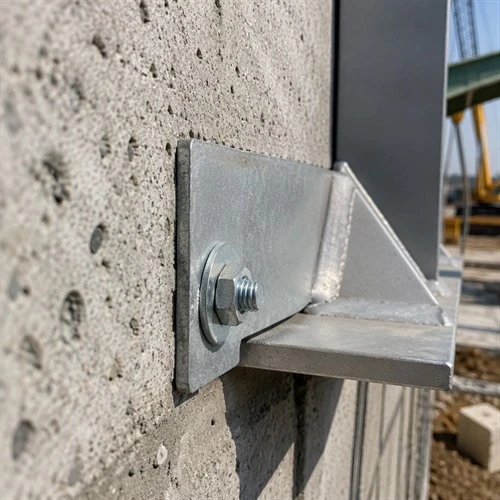
The Application Rule: A325 bolts are strictly engineered for heavy, steel-to-steel structural joints subjected to immense shear and tension loads (such as bridge trusses and skyscraper frameworks). A36 bolts, conversely, excel in anchoring steel columns to concrete foundations, light framing, and tie-rod assemblies where the fastener benefits from A36's excellent weldability.
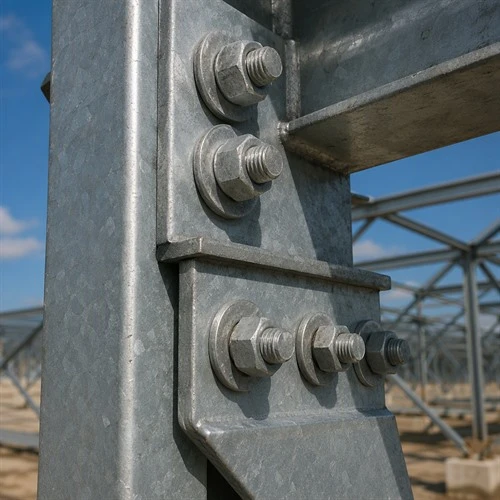
To protect these carbon steel fasteners from rust and atmospheric moisture, engineers specify protective finishes ranging from standard black oxide up to Hot-Dipped Galvanized (HDG) and zinc plating for outdoor infrastructure.
Why Sourcing Our Fasteners Makes Sense: Our Core Advantages
Premium Steel Sourcing: We utilize only high-tensile carbon steel and certified structural steel bars that meet strict international ASTM, DIN, and EN standards, ensuring maximum structural load capacity.
Advanced Anti-Corrosion Coatings: Our specialized hot-dipped galvanizing and industrial zinc coating lines guarantee uniform thread clearance and maximum service life in aggressive, high-moisture environments.
Custom Geometric Fabrications: Whether your project requires non-standard anchor bolt lengths, custom thread pitches, heavy hex nuts, or customized bent U-bolts, our factory delivers precise custom manufacturing to match your CAD specifications.
Flat-Packed Logistics Optimization: All fasteners and structural rods are securely packed, rust-protected, and tightly bundled at the factory to minimize volume, allowing more units per container and directly slashing your international ocean freight costs.